Commercial Air Duct Cleaning in Denver: Extending Your HVAC Lifespan
Share on:
Facebook
Twitter
LinkedIn
Key Takeaways
Regular commercial air duct cleaning in Denver can help add 5–10+ years to a well-maintained commercial HVAC system.
Clean ducts reduce strain on motors, fans, coils, furnace components, air handlers, and ventilation systems.
Denver’s altitude, dust, smoke, and rapid temperature swings make preventive duct cleaning more valuable.
Bee’s Air Duct Cleaning serves Denver, CO and the Front Range, including Aurora, Lakewood, Centennial, and nearby business corridors.
Our goal is peak efficiency, better indoor air quality, and longer equipment life for commercial buildings.
Introduction: Why Denver Commercial Air Duct Cleaning Matters for HVAC Lifespan
Commercial HVAC systems in Denver offices, clinics, restaurants, and light industrial spaces are major capital investments expected to last 15–25 years. But Denver’s dry climate causes unique structural stress on duct systems due to rapid temperature swings and dust accumulation, while wildfire smoke and construction debris add more contaminants.
Professional commercial air duct cleaning is not cosmetic. It is hvac system cleaning that helps protect ROI, warranties, comfort, and reliability. Bee’s Air Duct Cleaning follows manufacturer-aware practices and points property managers to our commercial air duct cleaning in Colorado page for service details.
Dirty ducts can cause:
Reduced airflow and higher static pressure.
Overheating motors, belts, bearings, and fans.
Ice on coils or stressed heating components.
Premature replacement of expensive equipment.
How Dirty Commercial Air Ducts Shorten HVAC System Life
In a commercial hvac system, “dirty” means more than visible dust. It includes paper fibers, drywall dust from tenant build-outs, pollen, dirt, mold risk in damp sections, smoke particles, and debris trapped on interior surfaces of the duct system.
Denver’s altitude changes how HVAC systems function, requiring higher pressure for proper air circulation. When ducts are restricted, blowers run longer or harder. Debris that bypasses filters can settle on coils, raising compressor stress and reducing efficiency. Studies show that commercial HVAC systems are responsible for over 30% of the overall energy consumed in a commercial building, highlighting the importance of maintenance.
Neglected air duct systems can turn minor filter issues into fan overhaul, coil replacement, or full duct replacement projects.
Benefits of Commercial Air Duct Cleaning for Lifespan & Reliability
Scheduled commercial air duct cleaning reduces maintenance calls and helps delay replacement.
Lower mechanical wear on fans, belts, and bearings due to restored airflow.
More stable coil temperatures and refrigerant pressures.
Reduced corrosion and microbial damage to ducts, insulation, and components.
Fewer emergency calls during Denver’s below-0°F winters and July heat waves.
Regular HVAC maintenance can extend equipment lifespan and reduce costly repairs.
Regular HVAC maintenance, including air duct cleaning, is essential for maintaining energy efficiency, as dirty ducts can cause HVAC systems to work harder, increasing energy consumption.
Regular air duct cleaning can help improve HVAC system efficiency, reduce energy costs, and enhance the overall indoor environment for occupants.
Professional duct cleaning services improve indoor air quality, improve iaq, and help improve indoor air quality for occupants and sensitive electronics.
The Environmental Protection Agency (EPA) ranks indoor air pollution, also known as sick building syndrome (SBS), among the top five environmental risks to public health. The quality of indoor air significantly impacts productivity, health, and satisfaction in commercial spaces, making air quality management essential for business success.
Typical Commercial Buildings in Denver That Need Regular Duct Cleaning
Different commercial buildings stress ducts differently:
Downtown Denver office towers, coworking spaces, and government offices with occupant density and paper dust.
Healthcare clinics, dental offices, and outpatient centers along Colorado Blvd and Aurora.
Restaurants, breweries, and retail shops in LoDo, RiNo, and Highlands.
Warehouses near I-70 and Denver International Airport with dust and exhaust.
Buildings renovated between 2018–2024 with embedded construction dust.
Proper air duct cleaning is critical for regulatory compliance in industries like healthcare and food service. In hospitals or food manufacturing facilities, air duct cleaning may be required quarterly or semi-annually due to higher contamination risks.
Our Commercial Air Duct Cleaning Process in Denver
Bee’s Air Duct Cleaning designs each job for the building, facility, schedule, and business environment.
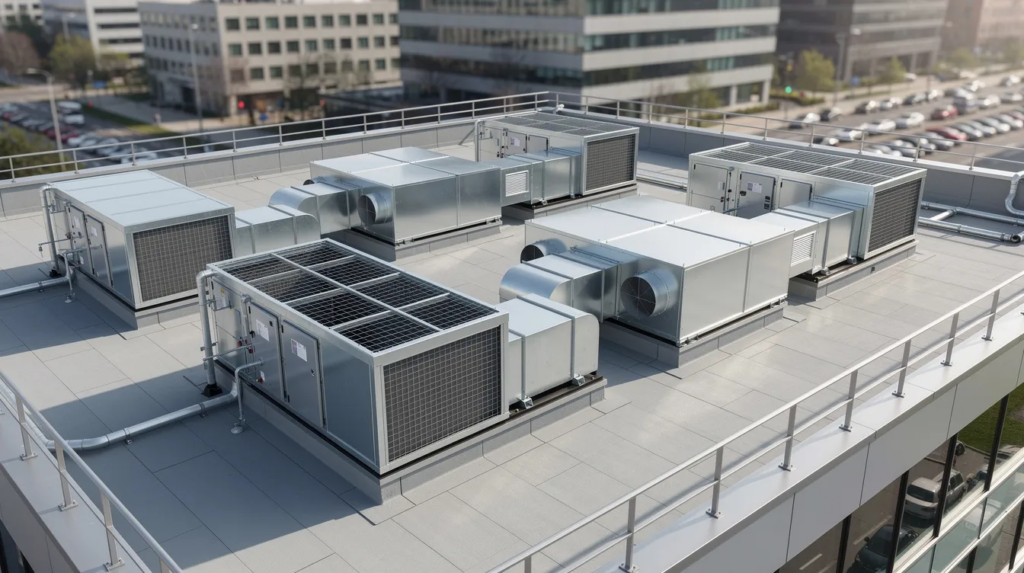
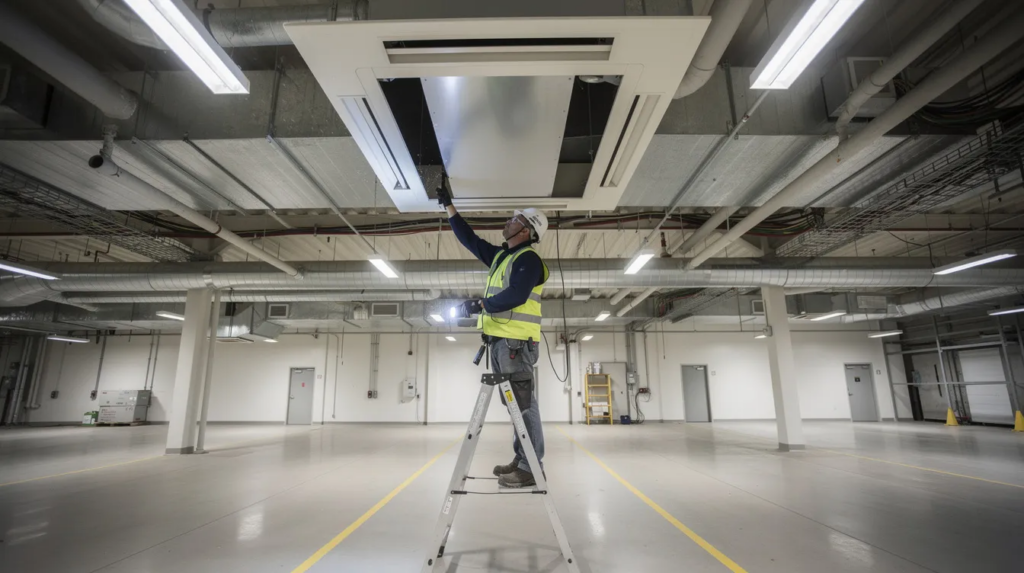
We review rooftop units, air handlers, branches, access points, and the duct system.
We document contamination with visual checks and photos.
We discuss hot/cold spots, repairs, and energy concerns.
We isolate zones for night or weekend work when possible.
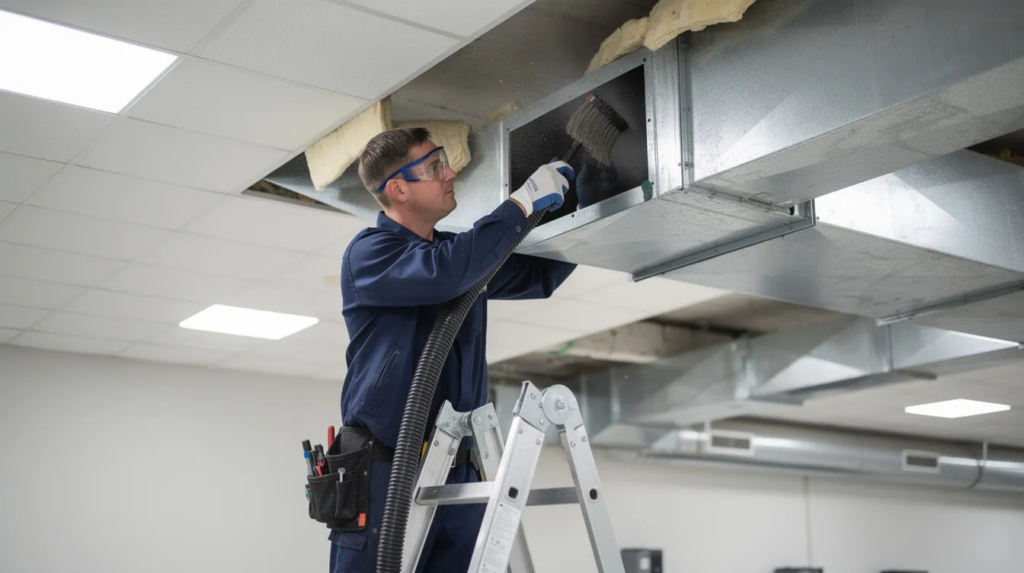
We use negative-pressure collection, vacuum equipment, brushes, air whips, and contact vacuum tools to remove dust and contaminants.
We clean registers, grilles, and accessible surfaces for a more complete result.
The NADCA ACR Standard governs assessment, cleaning, and restoration of air duct systems. NADCA certification indicates that a company has passed rigorous testing covering HVAC mechanics, safety standards, and indoor air quality protocols. To be admitted to NADCA, air duct cleaning companies must meet stringent requirements, including employing certified air system cleaning specialists (ASCS). NADCA members are required to follow a code of ethics that protects consumers and ensures compliance with industry standard requirements.
Air duct cleaning is unregulated at the state level in Colorado, so verify licensing, general liability insurance, and worker’s compensation. Certified Ventilation Inspectors (CVI) can diagnose complex airflow issues in larger commercial properties.
EPA does not register biocides for use on internally lined fiberglass ducts, and improper use can affect air quality. Internal fiberglass duct liners require careful handling to avoid damage during cleaning processes.
How Often Should Denver Commercial Air Ducts Be Cleaned?
NADCA recommends air duct cleaning every three to five years for optimal HVAC performance.
Standard offices and retail: every 3–5 years, plus annual inspections.
Healthcare, labs, and sensitive equipment spaces: every 1–3 years or by policy.
Food service, gyms, manufacturing, or heavy particulate sites: inspect more often.
Clean earlier after tenant improvements, sanding, drywall work, wildfire smoke, water intrusion, or nearby construction.
Commercial air duct cleaning typically starts at a cost of $1,000 to $2,000, depending on the size and complexity of the HVAC system. Factors influencing cost include facility size, contamination level, and cleaning methods. The time required to clean a commercial HVAC system can range from one day to several weeks, which can also affect overall cost.
Commercial HVAC Maintenance Plans That Extend Equipment Life
Duct cleaning works best as part of preventive maintenance.
Coordinate commercial air duct cleaning with coil cleaning and filter upgrades.
Inspect fan motors, belts, bearings, dampers, and appliance connections like dryer exhaust where relevant.
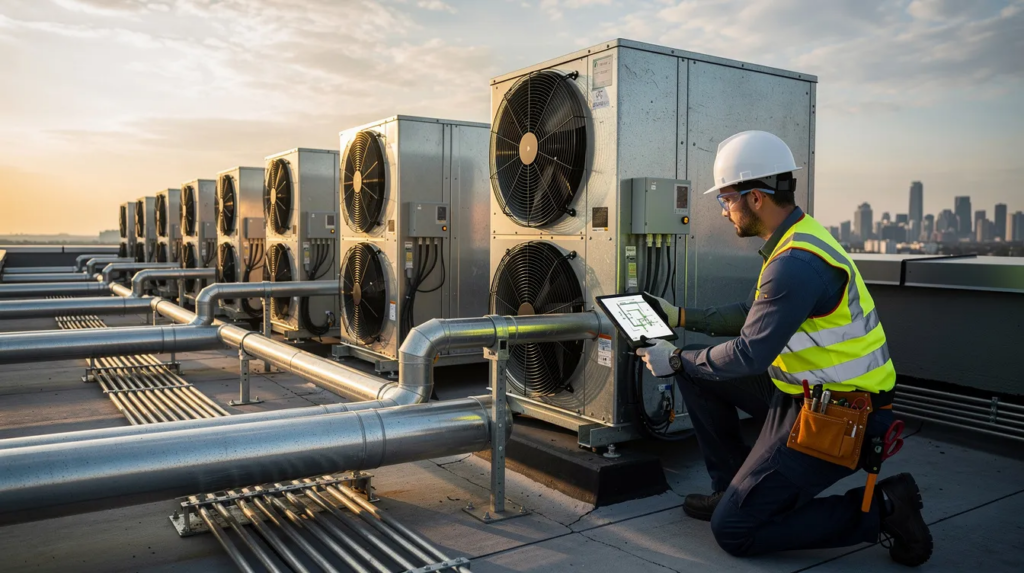
Measure static pressure and airflow before and after cleaning.
Coordinate with your HVAC contractor to protect warranties.
Plan around expected rooftop unit and air handler life so equipment can reach 20–25 years where design allows.
Bee’s provides affordable services, clear reports, and proven expertise for commercial air, residential house projects, pets-related dust concerns, and dryer vent needs. Learn more at our main site.
Signs Your Denver Commercial HVAC System Needs Duct Cleaning Now
Rising energy bills without schedule or occupancy changes.
Frequent repairs on motors, VFDs, or belts.
Wide temperature differences between floors or zones.
Dust streaks around supply registers and returns.
Stuffy air, odors, allergy complaints, or poor iaq after filter changes.
Smoke, fire, or water intrusion.
Visible debris, mold concern, or damaged insulation.
Filters loading faster than expected.
Why Choose Bee’s Air Duct Cleaning for Denver Commercial Properties
Bee’s Air Duct Cleaning is a Colorado-focused company serving Denver and Front Range property owners, not a generic national franchise. We help owners move forward with practical maintenance plans.
Experienced with commercial air duct projects, mixed-use buildings, offices, and owner-occupied facilities.
Commercial-grade negative-air machines, monster vac-style collection, and agitation tools.
Trained technicians who understand hvac system components and airflow.
Clear proposals, photos, and communication for your account records.
Flexible schedule options, including weekend work.
Transparent recommendations so you can trust the next step.
For a complete evaluation, contact Bee’s Air Duct Cleaning through our Denver air duct cleaning page and we’ll help ensure the work is done correctly.
Frequently Asked Questions
Will commercial air duct cleaning void my HVAC manufacturer warranty?
No, not when performed according to manufacturer guidance and industry standards. Keep Bee’s invoices, reports, and photos with your maintenance records.
Can you clean air ducts in occupied Denver office spaces without disrupting operations?
Yes. We can phase work, isolate zones, and schedule evenings, early mornings, or weekends to reduce disruption.
Do you only clean ducts, or can you address coils and other HVAC components too?
Our core service is commercial air duct cleaning, but we can include registers, grilles, and accessible coil cleaning or coordinate with your HVAC contractor.
How do you handle older or fragile commercial ductwork in historic Denver buildings?
We inspect first, plan access carefully, use gentler methods when needed, and protect fragile ductwork or liners.
Can you provide documentation that supports my capital planning and budgeting?
Yes. We provide photos, summaries, and future maintenance recommendations to support budgeting, compliance, and replacement planning.

 Call Now